- A report that puts send transport in the spotlight
- How many families does this effect?
- A new funding formula from April 2026
- Progress on wider send funding
- Why post-16 transport matters so much?
- What the send reforms mean for transport?
- What this means for families right now?
A Report That Puts SEND Transport in the Spotlight
On 6 March 2026, the Public Accounts Committee – Parliament’s body for scrutinising how public money is spent – published a dedicated report on home-to-school transport. It is one of the most detailed looks at this service in recent years, and for SEND families and transport providers, it sends a clear message: this is a service that matters, and one that deserves proper national attention and investment.
The report covers how the service is funded, how it is planned, what the government is doing to improve it, and where more work is still needed. For families who depend on transport to get their children to school, a specialist college, or a training placement, the findings offer both reassurance and useful context.
How Many Families Does This Affect?
In 2023–24, home-to-school transport accounted for approximately 3.7% of total local government spending, and it is one of the fastest growing areas of local authority expenditure. The County Councils Network estimates that councils transported a record high 206,000 children and young people up to age 25 with SEND to school last year at a cost of £2 billion. Across England as a whole, the figure rises to around 520,000 children and young people when all eligible pupils are counted.
These numbers reflect a simple truth: for a very large number of families, home-to-school transport is not optional. It is the only way their child gets to school safely, consistently, and on time.
A New Funding Formula from April 2026
One of the more practical developments covered in the report is the introduction of a new funding formula for home-to-school transport, coming into effect from April 2026. The Ministry of Housing, Communities and Local Government has announced this new formula to better align funding allocated through the local government finance settlement with local need, and it reflects rural and urban differences – for example, by basing funding on journey time rather than miles travelled.
This is a meaningful step. Basing funding on journey time rather than straight-line distance is a more realistic way of accounting for what transport actually costs in different parts of the country – particularly in urban areas like London where routes can be complex and time-consuming even over short distances.
The PAC has asked the government to set out how it will monitor whether this new formula is working on the ground, so that adjustments can be made if needed.
Progress on Wider SEND Funding
The report also covers wider progress on SEND funding more broadly. The government has announced plans to write off 90% of the historic deficit from overspending on SEND – expected to reach over £5 billion by March 2026 – with SEND costs to be met from central departmental budgets from 2028–29.
The Local Government Association has welcomed this, saying it gives councils much-needed breathing space. This shift towards central government absorbing SEND costs from 2028–29 is a significant long-term commitment, and one that provides more stability for councils planning their services — including transport – in the years ahead.
Why Post-16 Transport Matters So Much
One section of the report that deserves particular attention from families is its focus on young people aged 16 and over. The PAC highlights that young people aged 16–19 with SEND have been among the most affected by rising transport pressures, and identifies a clear gap in entitlement once a learner reaches the age of 16.
Specialist further education colleges provide vital support for young people with some of the most complex needs, helping them develop skills for employment, independence, and adult life – and transport should not be the barrier that prevents them from taking up that opportunity.
The PAC is calling on the government to help parents navigate what it describes as an “unacceptable cliff-edge” in transport support for children who need assisted travel once they turn sixteen. This is a positive and important recommendation – one that recognises how much is at stake for young people at this stage of their education.
What the SEND Reforms Mean for Transport
The government’s broader SEND reforms, set out in Every Child Achieving and Thriving policy paper, have implications for transport too. The intention is that by identifying needs earlier and more effectively in local settings, fewer children will need transport to distant specialist provision – because more schools nearby will be equipped to meet their needs.
The report also looks at how improving local transport infrastructure overall could benefit entire communities, with a move to local bus franchising – where councils decide routes, timetables, and fares – potentially offering a way to complement specialist provision with lower-cost alternatives where appropriate.
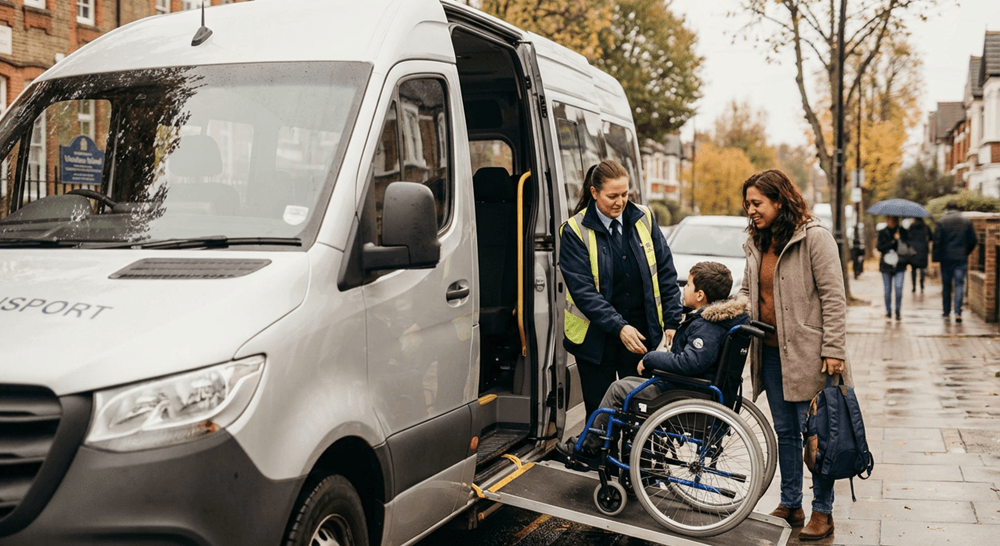
For children with the most complex needs, bespoke door-to-door transport from a trained, familiar driver will always remain the right approach – and the report makes clear that Parliament understands this.
What This Means for Families Right Now
For families currently receiving SEND transport support, children and young people who hold an EHC plan retain their statutory rights and entitlements under current legislation. The PAC’s report is about strengthening and improving the system – and its recommendations, if acted on, should make provision more consistent and better funded over time.
The report also reinforces something that many families already know from experience: specialist SEND transport providers are central to making this system work in practise. Councils across the country depend on private operators to deliver safe, consistent journeys for children and young people with complex needs – and given the rising number of children being supported, that role is only becoming more significant.
Read more on this here.
Let Jimac Cars provide safe and reliable transport for families and young people with SEND needs, making every journey easier and stress-free. Jimac Cars works with families, schools, and councils across London to deliver specialist, trusted SEND transport. Get in touch to find out how we can support your child’s journey.